Three decades, the same garden.
The story of the Ashford family in Westmount: our Miniature and Standard Schnauzer lines, and the health testing we require before every litter.
A German breed, raised the English way.
It began with Kaiser, a Standard Schnauzer that William Ashford, Nigel's father, brought over from Germany in 1994 — not for breeding, but simply because no dog in the neighbourhood carried himself with quite that quiet dignity. Neighbours soon started asking where to find "the same dog." The first litter was born from a question asked once too often to ignore.
Nigel grew up in that house, a wire-slicker brush in hand before he could properly manage one on his own hair. Today, with Camille, he keeps his father's rule: never more than two litters a year, never a puppy placed without a prior meeting.
Thirty years on, the kennel still runs from the same Westmount house, with the same walled garden where Kaiser used to spend his afternoons keeping watch over the street, eyebrows furrowed, exactly as he should.
Two sizes, one standard.
We don't diversify beyond these two varieties. Knowing two lines well beats a passing acquaintance with six.
Miniature Schnauzer
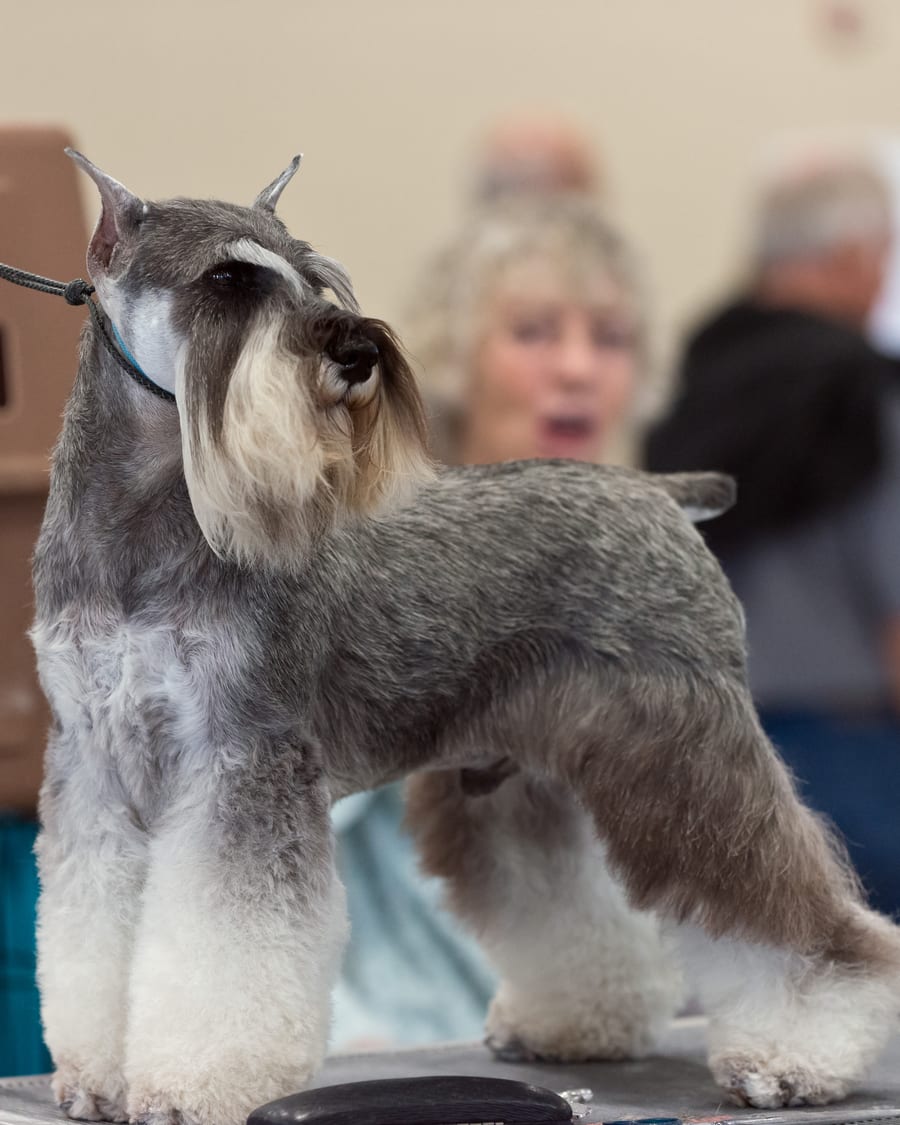
The quintessential apartment size: sharp, intelligent, and compact enough to suit Westmount as well as the countryside. Its wiry coat and near-absent shedding make it a favourite with families sensitive to loose fur — though we never promise a truly hypoallergenic dog, since no such breed exists.
Worth knowing: a touch stubborn, and quite vocal as a watchdog — not the dog for a building with nervous neighbours.
Standard Schnauzer
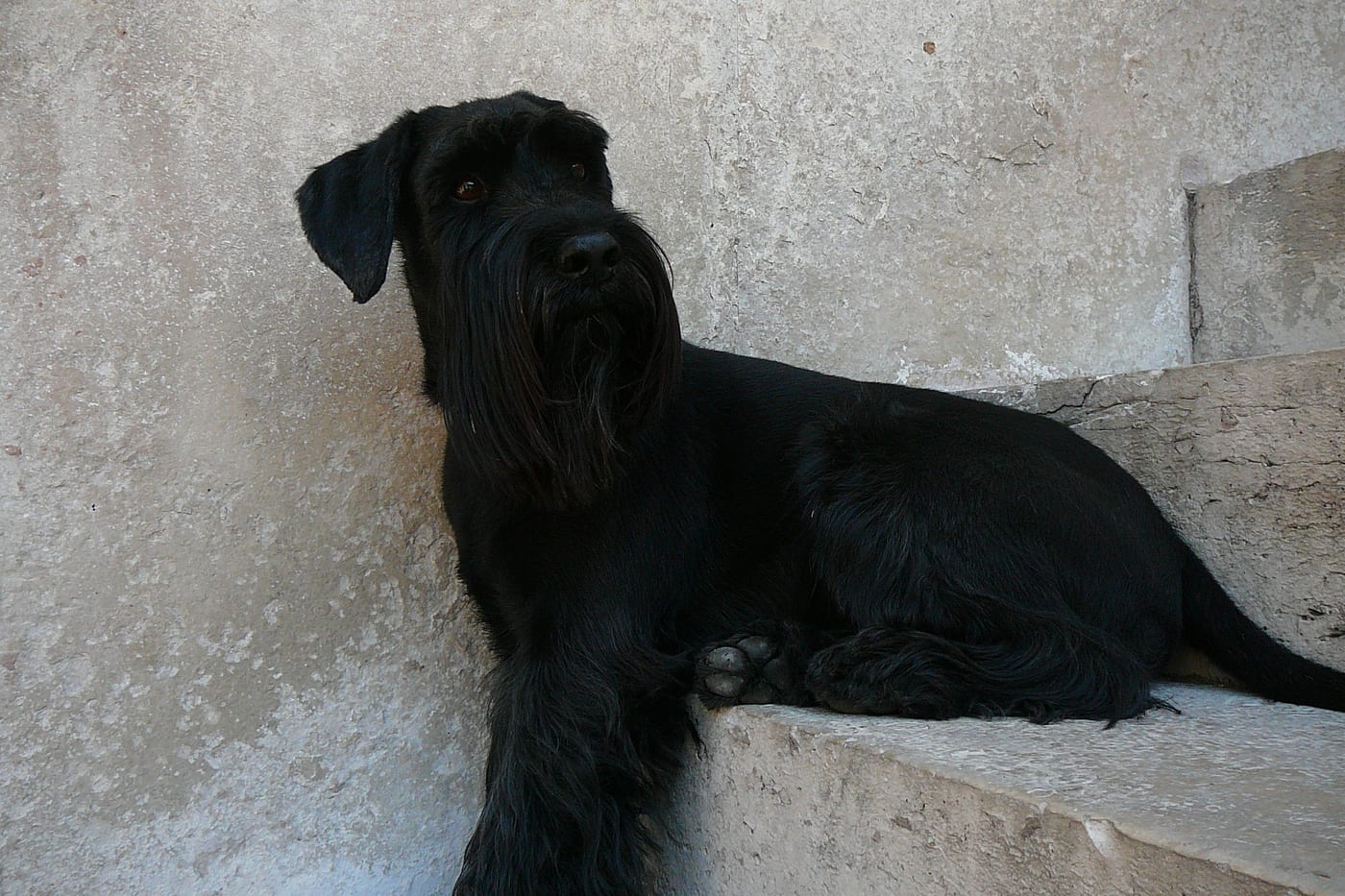
Less common than its miniature cousin, a medium, athletic dog equally at home on a city walk or a hike. The temperament resembles the miniature's, settling further with maturity.
Worth knowing: needs more daily exercise than the miniature, and firm training from a young age — its sharp mind comes with an independent streak.
Both our lines come in three recognized colours: salt and pepper (the most common), black, and black and silver (mostly in the miniature). All require the same upkeep: weekly brushing and professional grooming — hand-stripping or clipping — every six to eight weeks.
What we screen for, and what we guarantee.
No breeding takes place until both parents have completed the screenings the breed calls for. Certificates are handed to you directly — not summarized, not "available on request."
Hips and patellas
Hip radiographs (Standard line) and patella evaluation (Miniature line), on both parents.
Heart and eyes
Cardiac exam and annual ophthalmologic exam by a veterinary specialist.
Von Willebrand panel
DNA test for this hereditary clotting disorder, common in Schnauzers, to avoid pairing two carriers.
Two-year guarantee against serious hereditary conditions, provided in writing. We also brief every family on the breed's predisposition to hyperlipidemia: a suitable, low-fat diet prevents most of the pancreatic issues specific to Schnauzers.
Come see for yourself before deciding.
We welcome families into our garden by appointment, even without a firm plan. You'll see where the puppies are born, meet the mothers, and ask the hard questions.
One piece of advice, even if you don't adopt from us: be wary of any breeder who offers to meet in a parking lot or won't show you the mother. It's the most reliable red flag there is.